

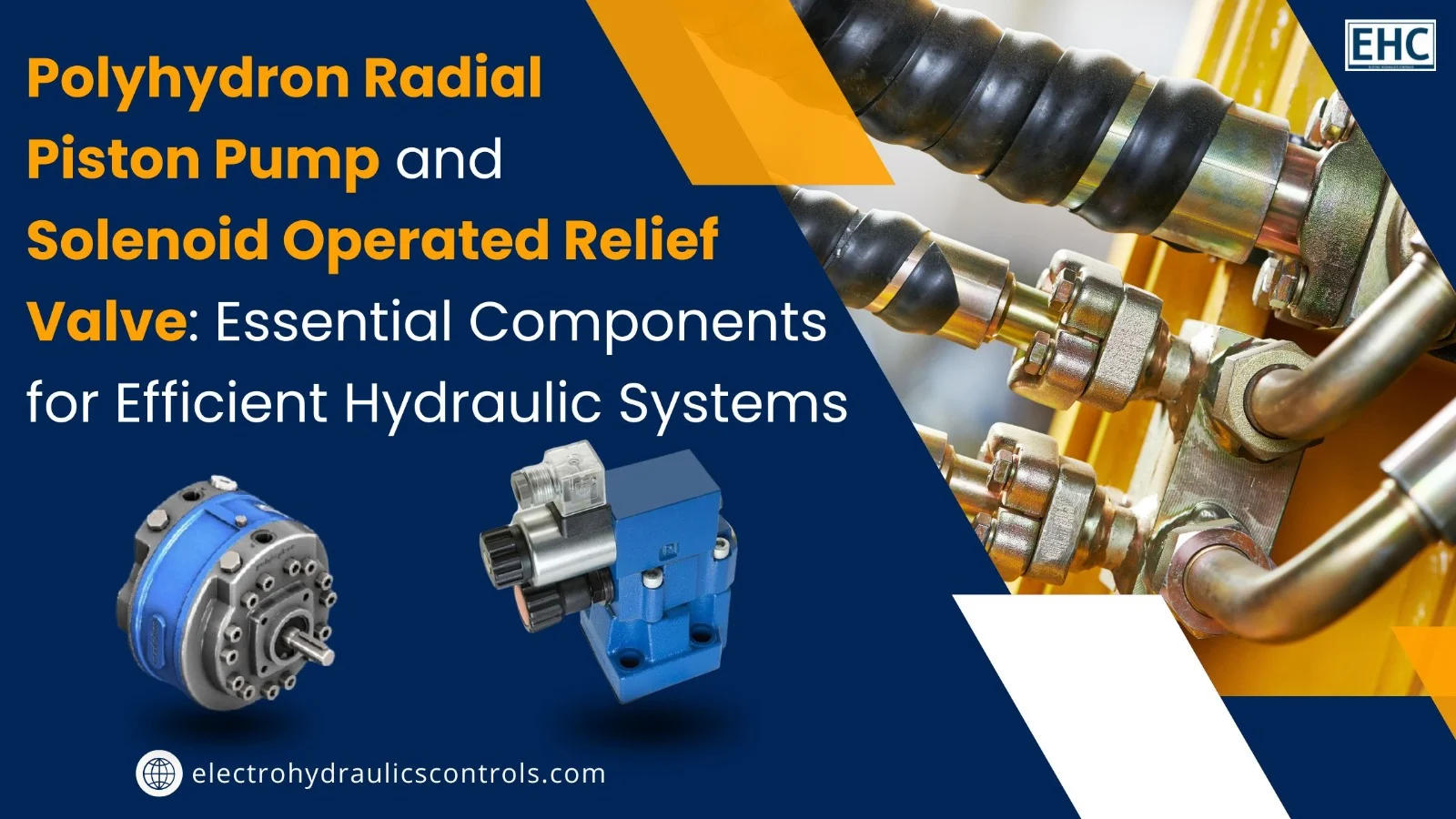
A Polyhydron Radial Piston Pump is a high-pressure hydraulic pump designed for efficient fluid power transmission, while a Solenoid Operated Relief Valve protects hydraulic systems by automatically controlling and limiting excessive pressure. Together, these components improve performance, reliability, and safety in industrial hydraulic applications.
Definition
What is a Polyhydron Radial Piston Pump?
A Polyhydron Radial Piston Pump is a positive displacement hydraulic pump in which pistons are arranged radially around a central shaft. As the shaft rotates, the pistons move in and out, generating hydraulic pressure and ensuring precise fluid delivery even under demanding operating conditions.
What is a Solenoid Operated Relief Valve?
A Solenoid Operated Relief Valve is an electrically controlled hydraulic valve that regulates system pressure. When pressure exceeds a predetermined limit, the solenoid activates the valve mechanism, allowing excess fluid to return to the reservoir and preventing damage to hydraulic components.
Benefits of Using Polyhydron Radial Piston Pumps and Solenoid Operated Relief Valves
Benefits of Polyhydron Radial Piston Pump
- High-pressure capability for demanding industrial applications.
- Excellent volumetric efficiency and energy savings.
- Longer service life due to robust construction.
- Precise flow control for accurate machine operations.
- Suitable for continuous-duty hydraulic systems.
Benefits of Solenoid Operated Relief Valve
- Automatic pressure regulation.
- Enhanced hydraulic system safety.
- Quick response to pressure fluctuations.
- Reduced risk of component failure.
- Easy integration with automated control systems.
Why These Components Work Together
In modern hydraulic circuits, the Polyhydron Radial Piston Pump generates the required hydraulic pressure and flow. However, pressure spikes can occur due to sudden load changes, blockages, or operational errors. The Solenoid Operated Relief Valve acts as a protective mechanism by releasing excess pressure, ensuring system stability and preventing equipment damage.
This combination is commonly used in:
- Hydraulic presses
- Machine tools
- Steel manufacturing plants
- Material handling equipment
- Injection molding machines
- Industrial automation systems
Technical Comparison
Polyhydron Radial Piston Pump
- Generates hydraulic pressure and flow.
- Operates using radial piston movement.
- Serves as the system’s power source.
- Offers high efficiency and reliability.
Solenoid Operated Relief Valve
- Controls and limits system pressure.
- Operates through electrical actuation.
- Protects hydraulic components from overpressure.
- Enhances system safety and stability.
Key Difference
The Polyhydron Radial Piston Pump creates hydraulic power, while the Solenoid Operated Relief Valve regulates and protects the system from excessive pressure.
Step-by-Step Guide: Selecting the Right Hydraulic Components
Step 1: Determine System Pressure Requirements
Analyze the maximum operating pressure required by your hydraulic equipment.
Step 2: Calculate Flow Demand
Evaluate the flow rate needed for actuators, cylinders, and motors.
Step 3: Select an Appropriate Pump
Choose a Polyhydron Radial Piston Pump that matches the pressure and flow specifications of your application.
Step 4: Install Pressure Protection
Integrate a Solenoid Operated Relief Valve to protect the system from overpressure conditions.
Step 5: Verify Electrical Compatibility
Ensure the valve solenoid voltage matches the control system requirements.
Step 6: Perform Testing and Calibration
Test the complete hydraulic circuit and adjust pressure settings according to operational needs.
Scientific Principles Behind Their Operation
Radial Piston Pump Efficiency
The pump operates based on the positive displacement principle, where piston movement creates suction and discharge cycles. Research in hydraulic engineering shows that radial piston pumps maintain high volumetric efficiency even at elevated pressures, making them ideal for precision applications.
Pressure Relief Mechanism
The Solenoid Operated Relief Valve follows fluid dynamics and pressure equilibrium principles. When hydraulic pressure exceeds the preset threshold, the valve opens, diverting fluid and restoring safe operating conditions. This mechanism minimizes energy loss and protects critical system components.
Best Practices for Maintenance
For Polyhydron Radial Piston Pumps
- Use clean hydraulic fluid.
- Monitor operating temperatures.
- Replace worn seals promptly.
- Follow manufacturer-recommended maintenance intervals.
For Solenoid Operated Relief Valves
- Inspect electrical connections regularly.
- Test pressure settings periodically.
- Clean valve passages to prevent contamination.
- Replace damaged coils immediately.
Frequently Asked Questions (FAQs)
1. What industries commonly use Polyhydron Radial Piston Pumps?
They are widely used in manufacturing, heavy engineering, steel plants, machine tools, and industrial automation systems.
2. Why is a Solenoid Operated Relief Valve important?
It protects hydraulic systems from excessive pressure, reducing the risk of equipment damage and costly downtime.
3. Can a radial piston pump operate continuously?
Yes. High-quality radial piston pumps are designed for continuous industrial operation when properly maintained.
4. How often should relief valves be tested?
Most industrial facilities inspect and test relief valves during scheduled preventive maintenance programs.
5. What causes hydraulic pressure spikes?
Sudden load changes, blocked flow paths, valve malfunctions, and rapid actuator movements are common causes.
Author Bio
Author: Electro Hydraulics Controls Technical Team
The Electro Hydraulics Controls Technical Team specializes in hydraulic systems, industrial automation, fluid power engineering, and hydraulic component solutions. With extensive experience in pumps, valves, power packs, and hydraulic control technologies, the team provides practical and technically accurate insights for industrial professionals.
Conclusion
The Polyhydron Radial Piston Pump and Solenoid Operated Relief Valve are fundamental components of modern hydraulic systems. While the pump delivers efficient hydraulic power, the relief valve ensures safe and controlled operation. Together, they enhance reliability, improve performance, and extend the lifespan of industrial equipment. Selecting the right combination and maintaining these components properly can significantly improve overall hydraulic system efficiency and operational safety.